
Service
Windows & Doors
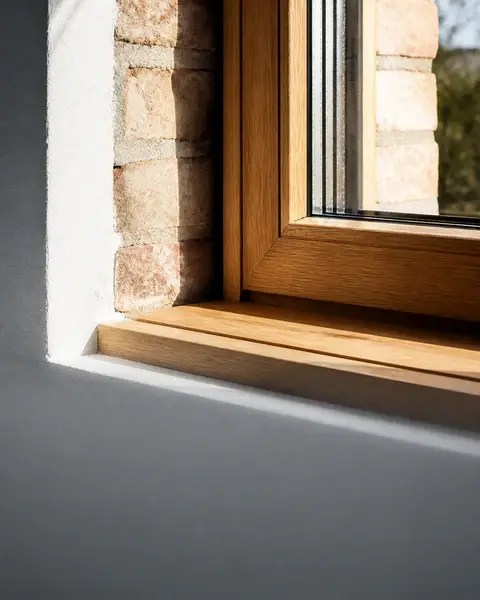
You rarely spot old windows by their looks – more often by the heating bill and the cold corner under the window sill. We replace them from the measured survey to the finished internal reveal, and we take particular care over the one part you will never see again afterwards: the joint to the wall.
Starting point
Typical starting points
In most of the houses we see, the windows are between twenty and forty years old. Whether replacing them is worthwhile depends less on their age than on the condition of the joints – and on what the house needs next.
- The heating costs keep rising although nothing about the house has changed – the windows date from the 1980s.
- There is a draught at the dining table whenever the wind picks up outside, and in the morning condensation collects at the edge of the glass.
- The facade is due to be insulated in the next few years, and the question is what comes first.
Service
What we take on
A window replacement consists of seven steps, and we keep every one of them in our own hands.
- Measured survey – every opening is measured individually, not ordered from the drawings.
- Removal of the old units, room by room and with dust protection.
- Installation of the new windows and doors, plumb and level in the planned installation plane.
- A continuous airtight joint to the wall all round – tighter inside than out.
- Reinstatement of the internal reveal: plastered, painted, with window sill.
- Disposal of the old units including glass and fittings.
- Final handover together with you, window by window.
What matters
The joint to the wall
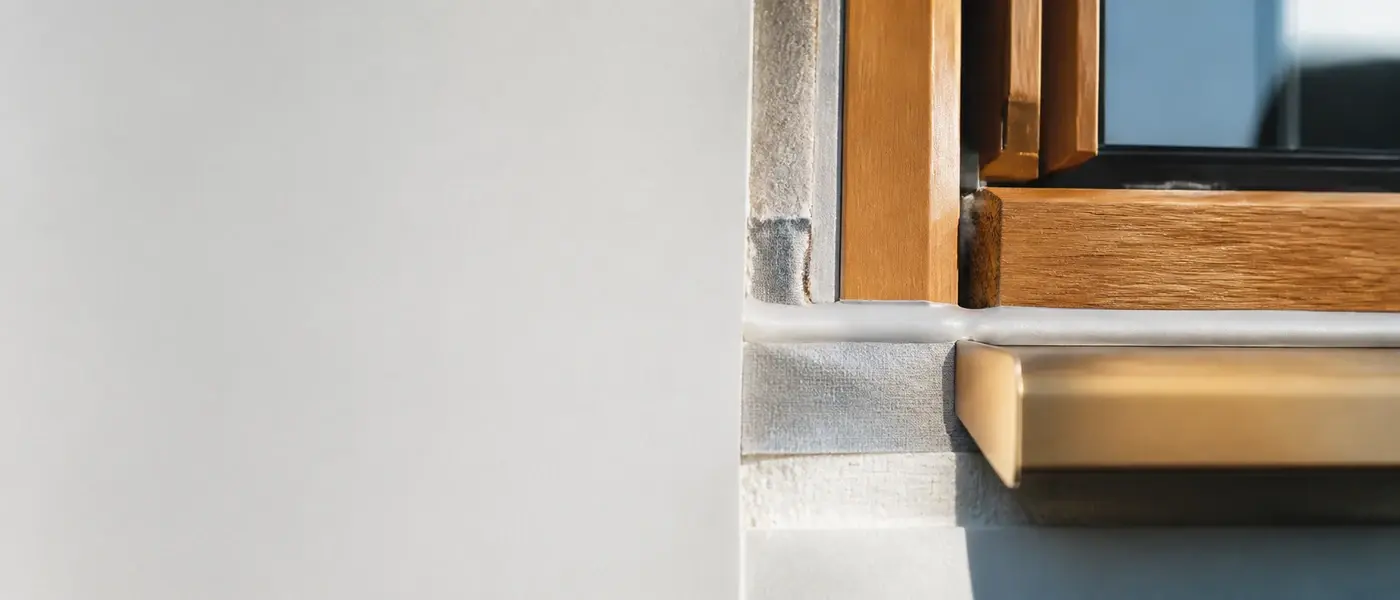
A window has three jobs to do at the joint to the wall: it must carry its weight into the wall, the joint must be insulated, and it must be sealed airtight on the inside and against driving rain on the outside. The rule is simple – tighter inside than out. If warm room air migrates through a leaky inner joint into the wall, it condenses there, and the damage shows up years later as a damp corner.
That is why the quality of a window replacement is decided not by the glazing but by the joint. Between double and triple glazing lie a few percentage points – between a clean joint and a careless one lies structural damage.
The second decision is the installation plane. If the window sits too far in, the reveal stays cold; if insulation is added later, the window sits in the wrong layer. So we fix the plane before ordering – with an eye on what else is planned for the house.
If the facade is still to come
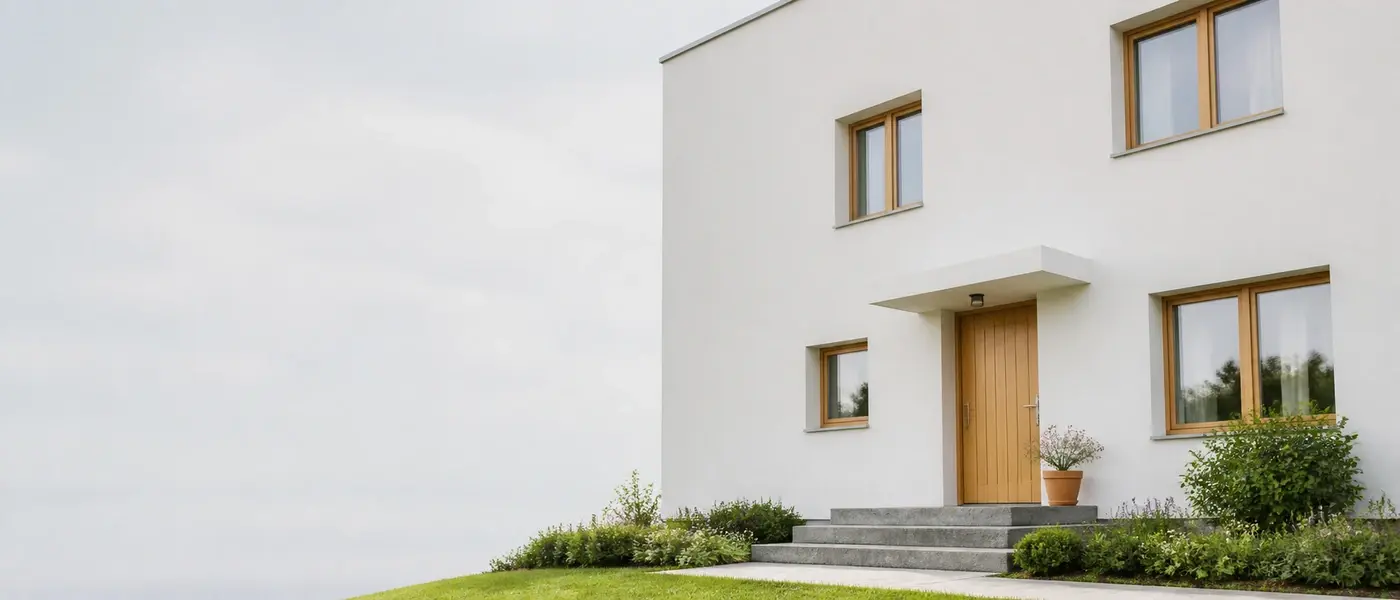
If insulation is planned for the next few years, we set the new windows now in the plane where they should sit once the insulation is on. At installation this costs nothing extra – and it avoids the thermal bridge that forms when the window is left sitting behind the insulation layer later.
A figure without a measured survey would be a guess. The price is set by the number and size of the openings, the material – uPVC, timber or timber-aluminium –, the condition of the reveals and the work involved in the joints. After the survey you receive a quotation with fixed line items per unit, not a lump sum.
Allow one to two days per room, including reinstating the reveal. A complete detached house usually takes one to two weeks, depending on the number of units. We set out the exact sequence room by room before work begins.
Yes. We work room by room: a room is cleared, covered, converted and handed back the same or the next day. Openings are never left open overnight – the old window only comes out once the new one is standing at the door.
Let’s talk about your project.
The initial consultation is no-obligation. If we are not the right partner for your project, we will tell you so.

Daniel Braun
Your point of contact
When you call or write, he is the one you reach. He takes down what needs doing and gets back to you – even if the answer is that we are not the right firm for the job.
Your enquiry has arrived.
Daniel Braun will get back to you within 24 hours on working days. If it is urgent, simply call him directly: 0176 / 43 888 723.
What happens after your enquiry
- A reply within 24 hours on working days.
- A short phone call – is the project a good fit for us?
- An on-site visit with a building survey.